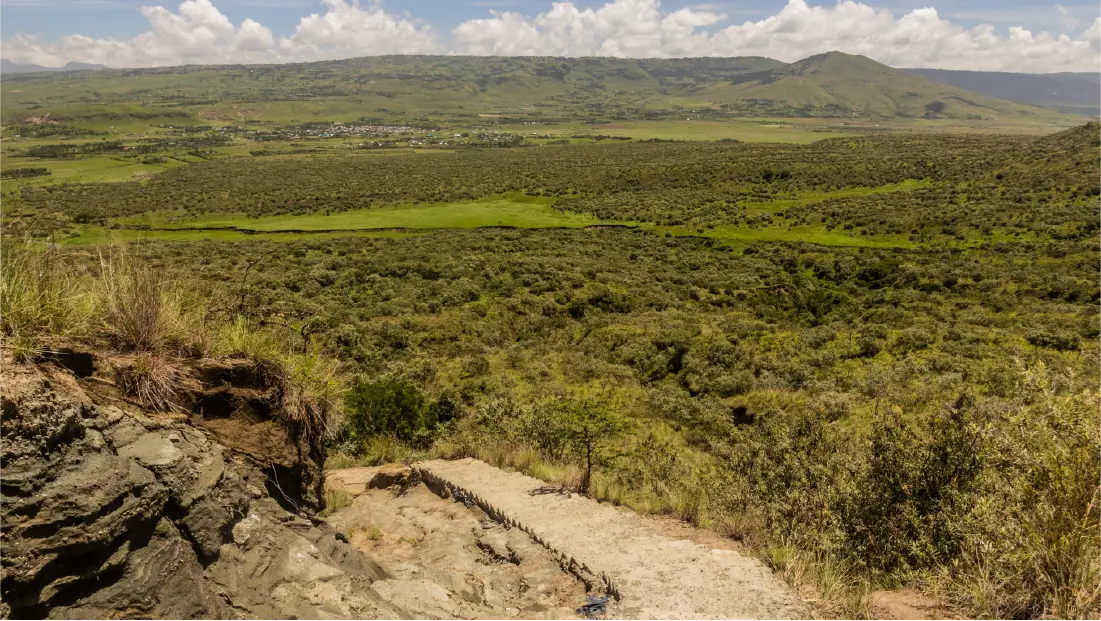
Mount Longonot stands as one of the most rewarding hiking destinations in Kenya, offering a thrilling combination of volcanic landscapes, breathtaking Rift Valley views, abundant wildlife, and a challenging outdoor adventure just a short drive from Nairobi. Whether you’re an experienced trekker or a weekend explorer looking to escape the city, Mount Longonot National Park delivers an unforgettable experience.
Located approximately 90 kilometers northwest of Nairobi, this dormant stratovolcano dominates the Great Rift Valley skyline and attracts thousands of hikers every year. From the challenging climb to the crater rim to the spectacular panoramic views overlooking Lake Naivasha, every step of the journey is worth the effort.
Quick Trail Overview
| Detail | Information |
| Location | Mount Longonot National Park, Nakuru County |
| Distance from Nairobi | 75–90 km |
| Driving Time | 1.5–2 hours |
| Elevation | 2,776 metres above sea level |
| Elevation Gain | Approximately 630 metres |
| Rim Distance | 6.2 km round trip |
| Full Crater Loop | 13.5–14 km |
| Hiking Time | 2–3 hours (rim only) |
| Full Loop Time | 4–6 hours |
| Difficulty | Moderate to challenging |
The History Behind Mount Longonot
The name Longonot originates from the Maasai word Oloonong’ot, meaning “mountains of many spurs and ridges.” This name perfectly captures the volcano’s rugged appearance, marked by steep gullies and dramatic ridgelines.
Mount Longonot formed as part of the geological activity associated with the East African Rift System. The volcano is considered relatively young and last erupted during the nineteenth century. Today, the massive crater remains one of its most striking features, sheltering a dense indigenous forest that has flourished within the caldera. The mountain was officially gazetted as a national park in 1983 to preserve its unique geological and ecological significance. [kws.go.ke], [kws.kikosi.co.ke]
Why Hike Mount Longonot?
Unlike many hiking destinations that offer either a summit experience or scenic views, Mount Longonot delivers multiple attractions in a single adventure:
- A challenging volcanic ascent
- Panoramic Great Rift Valley views
- A massive crater and caldera forest
- Wildlife encounters
- Incredible photography opportunities
- Easy accessibility from Nairobi
For anyone searching for the best day hikes near Nairobi, Mount Longonot consistently ranks among the top choices.
The Hiking Experience
Phase 1: From the Gate to the Crater Rim (3.1 km)
Your adventure begins at the Mount Longonot National Park headquarters. Initially, the trail follows a relatively gentle paved path before transitioning into volcanic dirt terrain.
The final section is where the real challenge begins.
Steep climbs, loose volcanic soil, and heavily eroded sections quickly test your stamina. Most hikers require between 45 minutes and one hour to reach the crater rim.
Take your time, maintain a steady pace, and remember to hydrate frequently.
Phase 2: Exploring the Crater Rim (7.2 km)
Reaching the rim is when the magic truly begins.
Suddenly, the vast caldera opens beneath you, revealing an untouched indigenous forest thriving inside the volcanic crater. The contrast between the green crater interior and the dry volcanic slopes is remarkable.
Many visitors choose to stop at the rim viewpoints before descending. However, adventurous hikers can continue around the entire 7.2-kilometer crater loop.
Highlights include:
- 360-degree Rift Valley views
- Spectacular Lake Naivasha panoramas
- Rugged volcanic ridgelines
- Elevated photography viewpoints
- Unique crater forest perspectives
The rim trail is narrow, exposed, and physically demanding, with several steep climbs along the way.
Phase 3: The Descent
The descent is often more challenging than the climb.
Fine volcanic dust and loose gravel can make footing unstable, especially during dry weather. Hikers should descend slowly, particularly on steep sections.
A pair of hiking poles can significantly improve stability and reduce pressure on the knees.
Flora and Fauna of Mount Longonot
Although best known for its volcanic scenery, the park supports diverse ecosystems and wildlife.
Flora
Vegetation varies depending on elevation and location:
Lower Slopes
- Acacia woodland
- Thorny scrub vegetation
- Native grasslands
Crater Interior
Inside the caldera lies a dense indigenous forest sustained by a unique microclimate. This hidden ecosystem creates one of the most fascinating ecological contrasts in Kenya’s national parks. [kws.go.ke], [kws.kikosi.co.ke]
Wildlife
While hiking, keep an eye out for:
- Plains zebras
- Giraffes
- Thomson’s gazelles
- Elands
- Impalas
- Warthogs
- Cape buffaloes
- Various bird species and birds of prey soaring above the crater rim [kws.kikosi.co.ke], [mtlongonot.org]
Wildlife sightings are more common on the lower slopes and open grassland areas near the park entrance.
Best Time to Hike Mount Longonot
The mountain can be climbed throughout the year, but some seasons provide better hiking conditions.
Dry Seasons (Best Conditions)
January – March
Clear skies, dry trails, and excellent visibility make this one of the most popular hiking periods.
June – October
Cooler temperatures and relatively dry conditions create ideal hiking weather.
Rainy Seasons
April – May
November – December
Trails can become slippery and visibility may be reduced. However, the landscape becomes incredibly lush and green.
Pro Tip
Start your hike between 6:30 AM and 8:00 AM to avoid midday heat and enjoy cooler, more comfortable conditions.
Wildlife Safety and Emergency Information
Mount Longonot is generally considered a safe hiking destination, but preparation is essential.
Emergency Contacts
Kenya Wildlife Service (KWS) Toll Free
- 0800 597 000 [kwspay.eci…izen.go.ke]
KWS WhatsApp
- +254 726 610 509 [kwspay.eci…izen.go.ke]
Mount Longonot National Park Office
- +254 774 337 577
- +254 775 669 398 [kws.kikosi.co.ke]
KWS Customer Service Email
- customerservice@kws.go.ke [kwspay.eci…izen.go.ke]
Safety Tips
- Carry 2–3 litres of water.
- Wear proper hiking footwear.
- Stick to marked trails.
- Avoid approaching wildlife.
- Hike with a companion whenever possible.
- Inform someone about your route before starting.
- Remember that mobile network coverage may be inconsistent on parts of the rim. [mtlongonot.org]
How to Get There
By Car
Drive from Nairobi via the A104 (Nairobi–Nakuru Highway).
At Longonot Centre, turn onto the access road leading directly to the park gate.
Travel time varies between 1.5 and 2 hours depending on traffic.
By Public Transport
Take a matatu to Naivasha from Nairobi CBD.
Alight at Longonot town and hire a boda-boda for the final stretch to the park entrance.
Park Entry Fees and Payments
Mount Longonot National Park is managed by the Kenya Wildlife Service.
Entry fees vary for citizens, residents, and non-residents. Payments are processed through the eCitizen platform, and visitors should always verify current rates before travel. [kws.kikosi.co.ke], [kws.go.ke]
Essential Packing Checklist
Must-Have Items
✅ Reusable water bottle or hydration bladder
✅ Hiking boots or trail running shoes
✅ Hat and sunglasses
✅ High-SPF sunscreen
✅ Energy snacks
✅ Lightweight rain jacket
✅ First-aid kit
✅ Fully charged phone
✅ Camera
✅ Hiking poles
Plastic-Free Rules
The park enforces strict regulations against single-use plastics. Bring reusable water containers to avoid delays at security checks.
Where to Stay Near Mount Longonot
Budget
- Fisherman’s Camp
- Crayfish Camp
- Taphe Guest Resort
Mid-Range
- Lake Naivasha Sopa Resort
- Sawela Lodge
- Naivasha Kongoni Lodge
Luxury
- Enashipai Resort & Spa
- Chui Lodge
- Loldia House
Most accommodation options are located within a short drive of the park and can easily be combined with other Rift Valley attractions.
Recommended One-Day Mount Longonot Adventure Itinerary
6:00 AM
Depart Nairobi.
7:30 AM
Arrive at Mount Longonot National Park.
8:00 AM
Begin the hike.
9:00 AM
Reach the crater rim and enjoy scenic viewpoints.
9:30 AM
Complete the full rim circuit.
12:00 PM
Descend to the park gate.
1:00 PM
Lunch in Naivasha.
2:30 PM
Lake Naivasha boat safari.
4:00 PM
Visit Crescent Island or Hell’s Gate National Park.
6:00 PM
Return to Nairobi.
One Mountain, Endless Rewards
Mount Longonot is more than just a hike – it is one of Kenya’s most accessible volcanic adventures. From its fascinating geological history and crater forest ecosystem to its demanding rim trail and unforgettable Rift Valley panoramas, the mountain delivers an experience that combines fitness, wildlife, nature, and adventure in one remarkable destination.
Whether you’re a Nairobi resident planning a weekend escape or a visitor exploring Kenya’s outdoor treasures, Mount Longonot deserves a place at the very top of your bucket list.
When the dust settles and the climb is behind you, Mount Longonot leaves you with something far greater than a summit photo – it leaves you with a story worth telling.